Write a menu before a packing list
List the meals you intend to make and the actions each one requires. Boiling water, frying vegetables and preparing a cold lunch ask different things of a kitchen. Count the people sharing the meal, the available water and the time you are willing to spend cooking. A menu that needs several pans at once is a poor match for a single small burner.
Look for ingredients that appear in more than one dish, but do not sacrifice safe storage to save space. Portion dry ingredients at home where practical, label containers and keep preparation instructions available offline. Include a meal that can be eaten safely without cooking when weather, equipment failure or restrictions make heat unavailable.
Read the site before unpacking
Check the land manager's current rules for stoves, fire, food storage, water use and wastewater. Restrictions can change during a trip. The National Park Service, U.S. Forest Service and individual campground operators may apply different rules to different places. A rule at Yosemite National Park does not establish what is allowed in Joshua Tree National Park or at your local woodland campsite.
Find a firm, level, noncombustible cooking position with the clearances required by your equipment. Keep it away from tents, overhead fabric, dry vegetation and walking routes. Do not turn a tent porch or vehicle into a kitchen when rain arrives. Combustion equipment must remain in an appropriate open outdoor location; ventilation gaps do not make an enclosure safe.
Build the walking kit around one vessel
For a compact walking setup, begin with a compatible stove and pot, an approved fuel supply, an ignition method, a spoon and your food and water plan. Add only what the menu requires. If everything cooks in one pot, serving from that pot may remove an extra bowl, provided it can be handled safely and suits the group.
Pack sharp tools with covers, protect fuel connections and keep the food-contact surfaces clean. Think about access: you should not need to empty the whole backpack to reach drinking water or a safe lunch. Include the full mass of fuel, water and packaging when deciding whether the setup is realistically carryable.
Use base-camp space to improve workflow
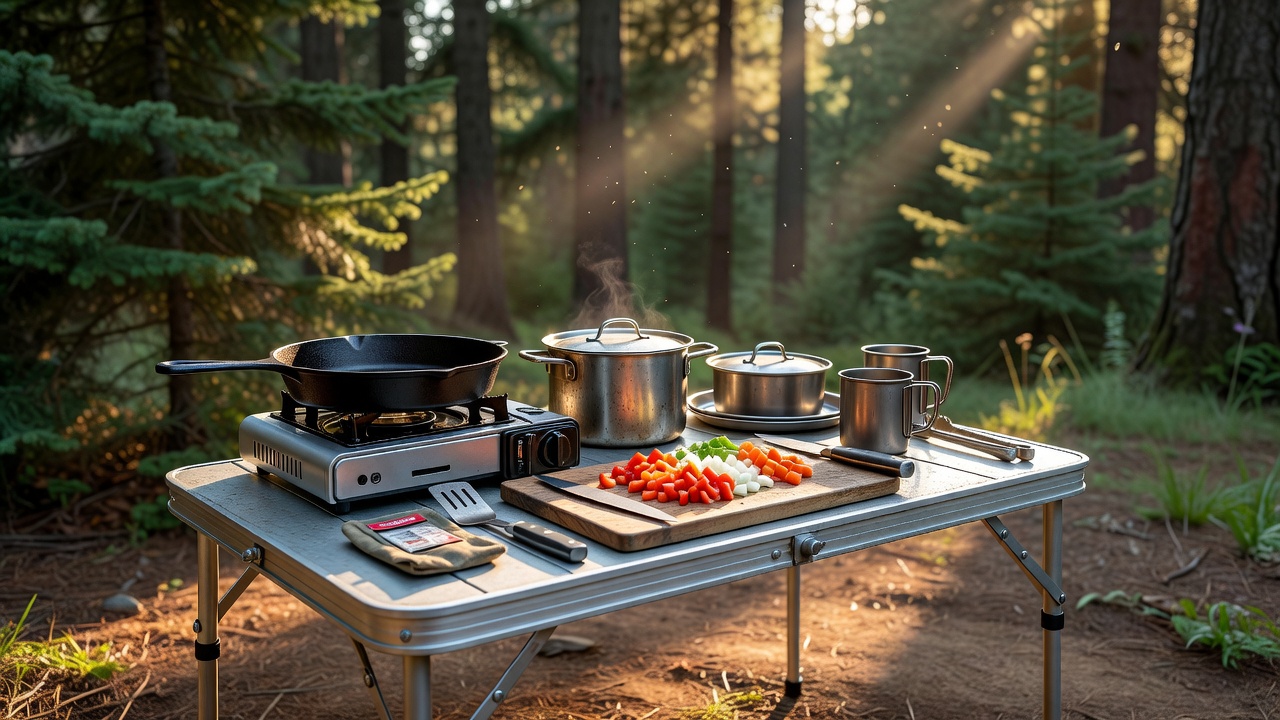
A vehicle-supported kitchen can justify a larger stove, cooler, folding worktop and separate wash basin. The benefit should be easier cooking and safer organisation, not simply more appliances. Check how much stable working space remains after the stove and ingredients are set down. Reserve a clear landing spot for hot cookware before lighting anything.
Keep fuel upright or oriented as its instructions require, protected from heat and accidental movement. Route hoses and cables away from feet and hot surfaces. Store food according to local wildlife rules; a normal cooler is not automatically an approved animal-resistant container. In bear country, follow the exact storage requirements for the area.
Create a clean-to-dirty route
Arrange the kitchen so clean food and utensils do not pass through the washing or waste area. Keep raw ingredients separate from ready-to-eat food, and provide a handwashing method using safe water. The prep area should be close enough to work efficiently but outside the stove's required clearance zone.
Water planning includes drinking, food preparation and cleaning. Do not assume a mapped water point is operating or that clear natural water is safe. Check current site information and carry a treatment method appropriate to the source and hazards. Washing dishes also needs a waste plan: strain or collect scraps and follow local disposal rules.
Decide what bad weather changes
Wind may make a chosen cooking position unusable, rain may threaten electrical equipment and cloud may stop a solar meal. Agree on the fallback before anyone is hungry. That might mean moving to another permitted outdoor position, choosing a no-cook meal or stopping cooking altogether. It must not mean bringing a combustion stove into shelter.
A solar cooker can complement a base camp when there is suitable daylight and someone can monitor it. Keep its reflective area away from traffic and maintain a safe food-temperature plan. A battery appliance needs a suitable dry operating arrangement and sufficient power and energy; it is not an automatic all-weather substitute.
Finish the meal by closing the system
Shut down equipment in the sequence specified by its manufacturer. Let parts cool fully before handling, disconnecting where required or packing. Check for spills, food fragments and loose items. Dispose of fuel containers only through an appropriate local route; do not puncture or burn them as a campsite shortcut.
Wash and dry equipment thoroughly when facilities allow, then inspect it at home. Record what ran short, what remained unused and which step felt unsafe or awkward. Those observations create a smaller, better setup on the next trip more reliably than buying another gadget.
Check the relevant authority
- National Park Service and U.S. Forest Service: find current local notices.
- Yosemite National Park and Joshua Tree National Park: examples of site-specific planning sources.
- CDC drinking-water guidance: water-safety background.