For boiling, keep the system simple
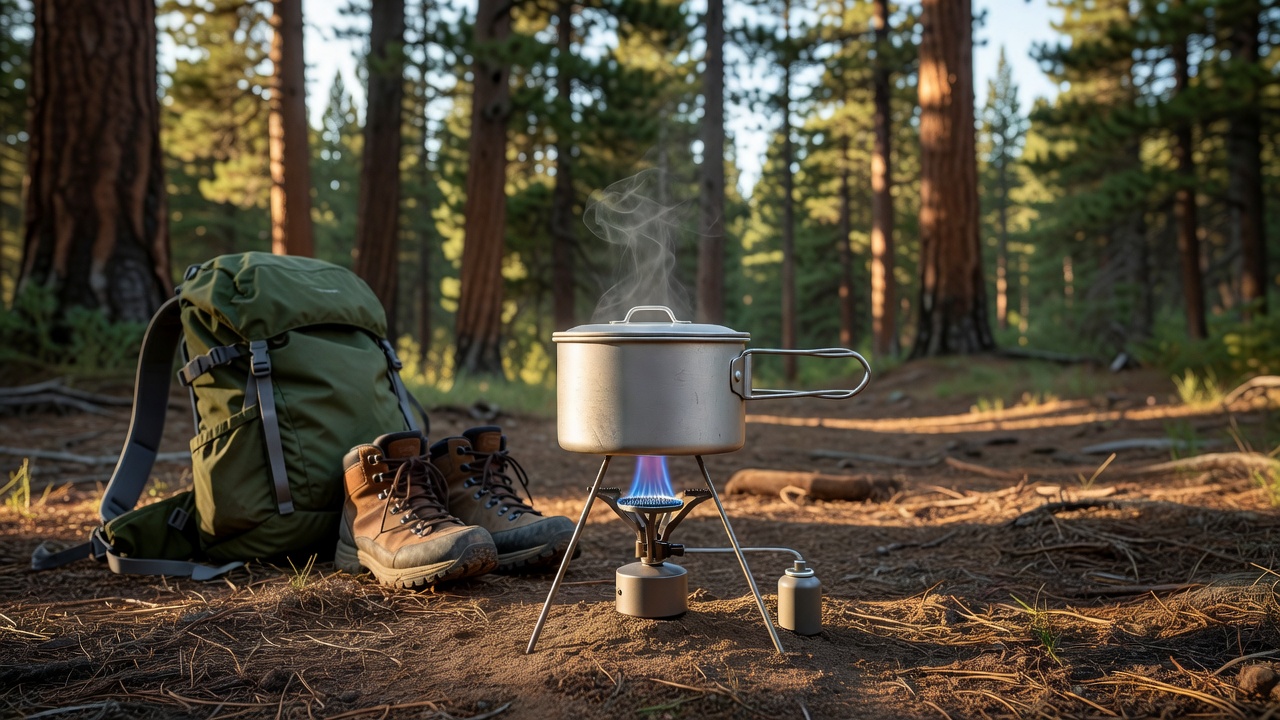
If breakfast means hot drinks and dinner comes from a rehydration pouch, your main task is heating water. An integrated canister system pairs a burner with compatible cookware, often using a heat exchanger around the pot base. That can simplify setup, but the pot, support and burner form a system: do not assume another pan will fit or operate safely.
A small screw-on burner with a separate pot can be easier to distribute through a bag and replace piece by piece. The trade-off is a taller assembly when the burner sits directly on the canister. Check the manufacturer's permitted pot size and load. Put the unit on firm, level ground, and never steady a leaning hot pot with your hand while adjusting the burner.
For cooking, look beyond maximum output
Rice, sauces and frying ask for controllable low heat, useful flame spread and a stable pan. A powerful, narrow flame can scorch the centre of a thin pan even when the rest stays relatively cool. Read operating instructions for supported cookware, and try your actual meal at home in an appropriate outdoor area before relying on the combination away from help.
Remote-canister designs place the burner separately from the fuel canister and can offer a lower cooking platform. The hose adds a connection and a part to protect during packing. Some designs permit inverted-canister operation under specified conditions; others do not. Never infer that ability from the presence of a hose, and never invert a canister unless the exact stove instructions allow it.
Fuel availability is part of the design
Threaded gas canisters, pierced cartridges, liquid fuels and alcohol systems are not interchangeable. Check the connection, approved fuel and local availability before travel. MSR, Primus, Jetboil and Trangia illustrate different approaches to portable cooking, not universal compatibility. A brand name alone is not a specification, and an unapproved adapter can introduce hazards.
Air travel adds another constraint. Consult your airline and the applicable transport authority about fuel, empty fuel containers and stove residues. Do not pack a gas cartridge because it is small or unopened. For international trips, confirm what you can buy at the destination rather than assuming the hardware shop carries your usual connector.
Cold and wind change the calculation
Wind can disrupt a flame and carry heat away from cookware. Shelter the cooking position by choosing an appropriate outdoor location, but do not enclose a canister with an improvised windshield. Trapped heat can overheat the fuel container. Use only wind protection explicitly approved for your stove, positioned exactly as instructed.
Cold can reduce the performance of some canister arrangements. Liquid-fuel systems may suit some cold-weather tasks but introduce pumping, priming and maintenance that require training. Never heat a canister with a flame, hot pan or unapproved device. If the system cannot operate safely in the conditions, use your fallback meal rather than trying to force it to work.
Portable electric cooking has a whole-system weight
A compact induction plate or heated lunch container may seem simple until you include its power source. Check both the appliance's rated power and the battery's continuous output, then examine usable energy and the manufacturer's restrictions. Watts describe power; watt-hours describe energy. A large power rating does not mean a battery will support a long cooking session.
Induction also requires compatible cookware. Mains appliances are not automatically suitable for wet outdoor conditions, and a campsite socket does not remove electrical safety requirements. Follow the site rules, equipment instructions and local electrical guidance. Keep connections dry and do not improvise damaged leads, overloaded adaptors or connections beyond your competence.
Audit the complete kit
Lay out the stove, pot, lid, fuel, ignition method, permitted wind protection, utensils and cleaning supplies together. Check packed dimensions with all protective cases in place. A nesting pot saves space only if the contents do not scratch its coating or leave fuel contamination near food. Let every component cool fully before storage.
Carry a practical backup ignition method where compatible, but do not treat it as a cure for a leaking or malfunctioning stove. Stop using damaged equipment and follow the manufacturer's inspection and maintenance instructions. The most useful innovation is often a system you can assemble correctly, cook with calmly and pack without loose or forgotten parts.
Never run a combustion stove in a tent, enclosed vehicle or enclosed shelter. Carbon monoxide can build up without a warning smell. Follow the exact equipment instructions and current fire restrictions.
Useful starting points
- MSR and Primus: consult model-specific instructions.
- Jetboil and Trangia: compare complete system requirements.
- FAA PackSafe: check current aviation restrictions before flying.