Give preparation a stable base
A flexible cutting mat may fit almost anywhere, but it still needs firm support. Placing it across an uneven rock or soft bag creates a moving cutting surface. If you plan to chop fresh ingredients, carry a board and use a stable table or other suitable support. For a simpler walking kit, prepare ingredients at home and reduce the cutting task at camp.
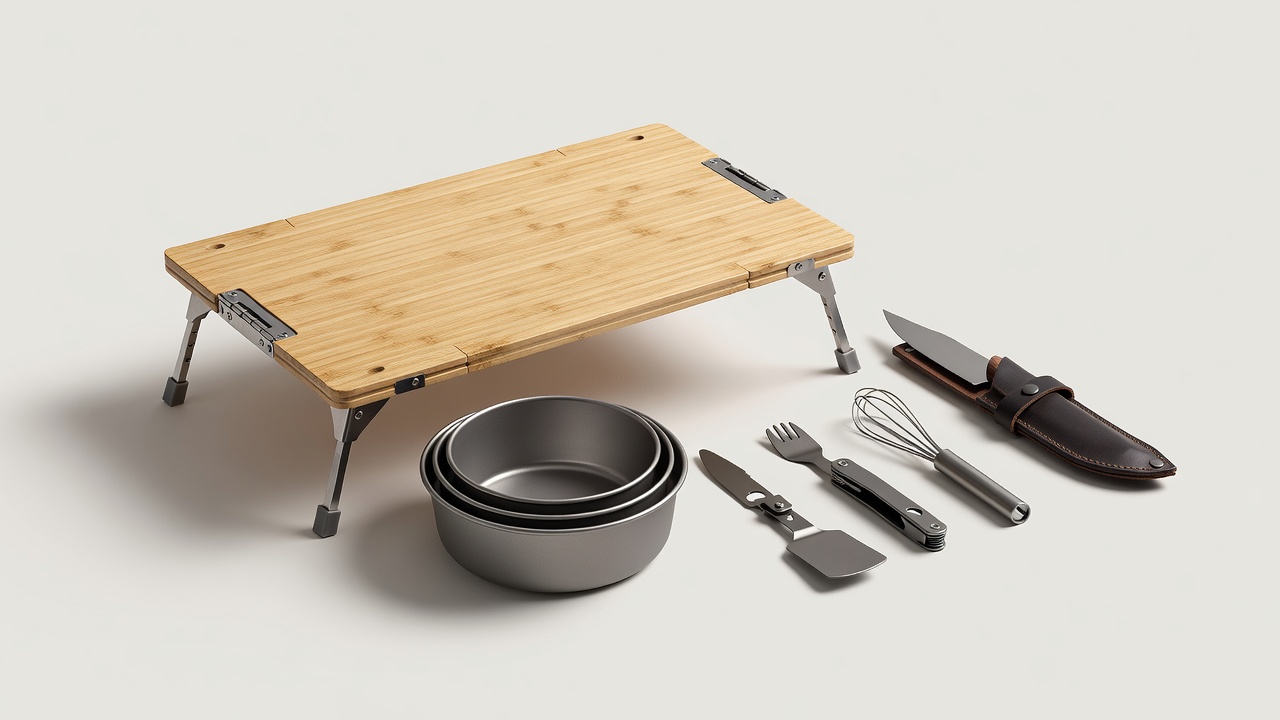
Folding worktops can turn a vehicle-based pitch into a useful kitchen. Check the leg locks, permitted load and resistance to sideways movement, not just the size of the top. A table that holds stacked plates may still wobble while you knead, cut or stir. Keep cooking appliances on a surface explicitly suitable for their heat, weight and required clearances.
Collapsible does not mean heatproof
Collapsible bowls and washing basins reduce the empty air you carry. Their flexible walls also behave differently from rigid cookware. Open the item fully, inspect it for damage and place it on a stable surface before filling. Lifting a flexible bowl by one edge can fold it unexpectedly and spill hot liquid.
Some collapsible pots combine a metal base with flexible sides. Others are serving containers only. Check the exact product's approved heat source, fill limits and handling instructions; never infer flame suitability from appearance or material. Keep flexible walls away from flames and hot exhaust, and avoid storing sharply pointed tools inside them without protection.
Nesting works when the pieces remain usable
Nesting cookware can use volume well, especially when a cup and stove fit inside a pot. Test the complete arrangement before the trip. Protect coatings from abrasion, keep components dry and make sure the lid closes without pressure on a valve or ignition mechanism. Do not put fuel-contaminated equipment in contact with food surfaces.
Shared lids and removable handles can reduce duplicate parts, but they can also create a bottleneck. Ask how you will lift a hot pot if the only handle is already attached to another vessel. Check that each handle locks positively and is approved for the pan. A universal-looking grip is not automatically safe for every rim.
Choose tools for the actual menu
A small grater, folding spatula or compact manual grinder can be useful if the meal needs it. Carrying every clever tool usually adds joints, cleaning and loose pieces without improving dinner. Write the menu, then identify each preparation action. If no dish requires draining, for example, a dedicated colander may not earn its space.
A knife should have a secure cover and a known safe storage position. Folding models need careful cleaning around the hinge and a reliable locking or handling arrangement. Never use a knife while the working surface is unstable. Check local rules for carrying blades, especially when travelling across borders or passing through transport security.
Count cleaning as part of the equipment
Hinges, hollow handles and sliding joints can trap food and wash water. Prefer designs you can inspect and clean with the supplies you will actually have. Food-contact materials should be suitable for their intended use, but a general material label does not tell you whether an individual product tolerates boiling water, abrasion or dishwasher cleaning.
Keep raw ingredients and ready-to-eat food separate. Where you cannot provide safe washing and sanitation, simplify the menu instead of relying on a quick wipe. A collapsible basin is a container, not a water-treatment device. Use safe water and follow the instructions for any cleaning or sanitising products you carry.
Collect scraps before washing and follow the land manager's rules for wastewater. “Biodegradable” soap does not make washing in a stream acceptable. Leave No Trace guidance and local site instructions are useful starting points, but the local rules determine where and how waste should be handled.
Run a packed-volume audit
Lay the whole kitchen out dry, then pack it into the space you intend to use. Include the board, food containers, washing kit, waste bags and protective covers. Photograph the arrangement if it helps you remember it. A flat object that blocks access to everything else can be less practical than a slightly bulkier item stored vertically.
After a trial meal, note which tools stayed unused and which tasks felt awkward. Remove duplication, not safety essentials. Let washed items dry before long-term storage, inspect locks and flexible seams, and replace damaged food-contact surfaces. The best compact kit is the one that opens cleanly, works predictably and returns home without hidden food residue.
Useful references
- Sea to Summit and GSI Outdoors: examples of packable kitchen designs; follow product-specific instructions.
- Snow Peak: examples of modular camp equipment.
- Leave No Trace principles: minimise impact and handle waste responsibly.
- FDA food handling guidance: safe preparation and storage background.